

Creating a relaxing home workspace can significantly improve your productivity and overall well-being. When your workspace feels comfortable and calming, it becomes easier to concentrate, reduce stress, and maintain motivation throughout the day. Whether you work from home full-time or occasionally, setting up an environment that supports your workflow is essential. In this post, we will explore practical tips for designing a relaxing home workspace that boosts productivity.
Why a Relaxing Workspace Matters
A workspace that feels cluttered or uncomfortable can increase distractions, cause fatigue, and lower your efficiency. On the other hand, a well-organized and inviting area helps you stay focused and enjoy your tasks more. Fostering a space that promotes relaxation doesn’t mean sacrificing professionalism; it simply means creating an environment tailored to your comfort.
Tips for Creating Your Relaxing Home Workspace
1. Choose the Right Location
Selecting the ideal spot in your home is the first step. Here are some factors to consider:
– Natural Light: Position your desk near a window if possible. Natural light boosts mood and reduces eye strain.
– Minimal Distractions: Find a quiet corner away from household noise like the TV or kitchen.
– Comfortable Temperature: Choose a place where you can easily adjust the temperature to stay comfortable throughout the day.
2. Invest in Ergonomic Furniture
Comfort plays a huge role in relaxation and productivity. Ergonomic furniture supports your body, reducing strain and discomfort.
– Chair: Use a chair with proper lumbar support and adjustable height.
– Desk: Ensure your desk height allows you to work comfortably without hunching.
– Accessories: Consider a footrest or monitor stand to maintain good posture.
3. Keep It Organized and Clutter-Free
Clutter can distract your mind and create unnecessary stress. Make organization a priority:
– Storage Solutions: Use shelves, drawers, or storage bins to keep paperwork and supplies out of sight.
– Daily Tidying: Spend a few minutes at the end of each day clearing your workspace.
– Cable Management: Use clips or covers to keep cords tidy and prevent tangling.
4. Personalize Your Space Mindfully
A personalized workspace can make the area feel welcoming and inspire creativity, but avoid overdoing it.
– Inspiring Items: Add a few meaningful items like photos, plants, or artwork.
– Soothing Colors: Choose calming colors like soft blues, greens, or neutrals for walls and accessories.
– Limit Distractions: Avoid excessive decorations that may pull your attention away from work.
5. Optimize Lighting
Proper lighting reduces eye strain and keeps you alert.
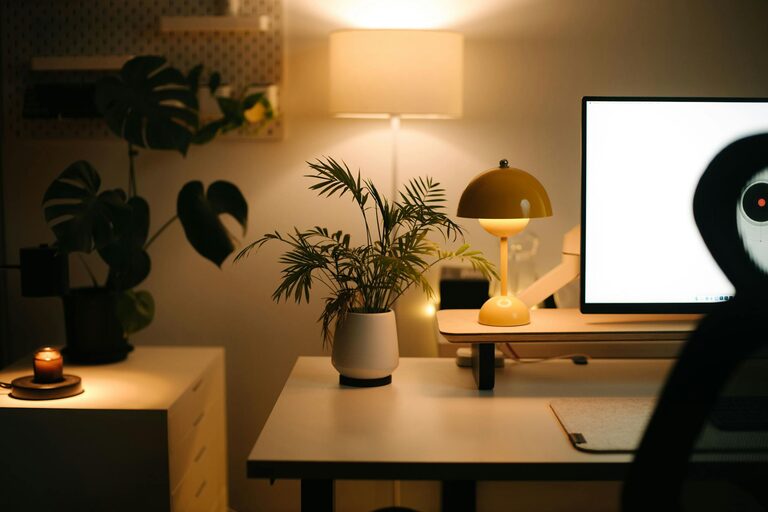
– Task Lighting: Use adjustable lamps for focused lighting.
– Ambient Lighting: Soft overhead lighting creates a relaxing environment.
– Reduce Glare: Position screens to avoid direct light reflecting on them.
6. Incorporate Natural Elements
Bringing nature indoors helps lower stress and improve focus.
– Houseplants: Low-maintenance plants like succulents or snake plants add greenery and clean air.
– Natural Materials: Use wooden furniture or accessories to create a warm, earthy feel.
– Fresh Air: Open windows when possible to let in fresh air and white noise.
7. Keep Technology Simple and Functional
Technology should aid your work, not complicate it.
– Reliable Equipment: Use devices that work efficiently to avoid frustration.
– Minimal Devices: Keep only the essentials on your desk to reduce distractions.
– Noise Control: Use noise-canceling headphones or white noise apps if needed.
8. Create a Routine and Break Space
Transitioning into work mode can be easier with structure.
– Start Ritual: Begin your day with a small routine like making tea or light stretching.
– Designated Break Area: If space allows, create a nearby spot to step away from your desk for short breaks.
– Regular Breaks: Frequent breaks help refresh your mind and maintain productivity.
Final Thoughts
Designing a relaxing home workspace is a personal journey. Experiment with different elements until you find the combination that helps you feel calm and focused. Small changes like decluttering, adding plants, or adjusting lighting can make a big difference in your daily work experience. Remember, the goal is to create a space where you can concentrate, feel comfortable, and enjoy your work — leading to better productivity and satisfaction. Start today by applying these tips and watch your home workspace transform into a haven for effective and relaxed working.